


Instituto Ramacrisna is a social, non-profit institution with no religious or political affiliations, founded in 1959 by the Brazilian accountant and journalist Arlindo Corrêa da Silva. It is governed by a General Assembly, a Board of Directors, a Fiscal Council, and an Executive Board.
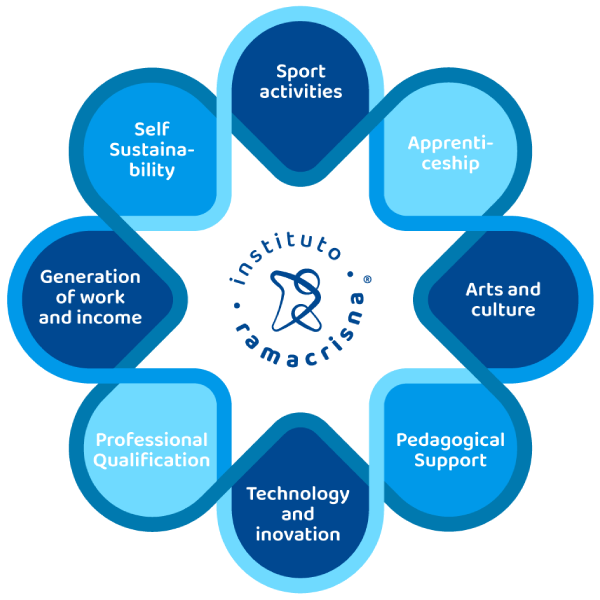
For over 60 years, we have developed educational, vocational, cultural, employment and income generation, technology, sports, and leisure projects, among others, serving communities in situations of social vulnerability across 11 cities in the Belo Horizonte Metropolitan Region.
We are a reference in self-sustainability projects through the work carried out at our wire mesh factory. The profit generated from sales is allocated to Ramacrisna’s social programs, ensuring greater autonomy and consistency in the support provided to the individuals served by our initiatives.










































We have become part of several network organizations, councils and forums to strengthen the articulations between companies, public authorities and social organizations, such as:











































Ensures equal opportunities, empowers and promotes social and economic inclusion, regardless of age, gender, disability, race, ethnicity, origin, religion or any other distinction.

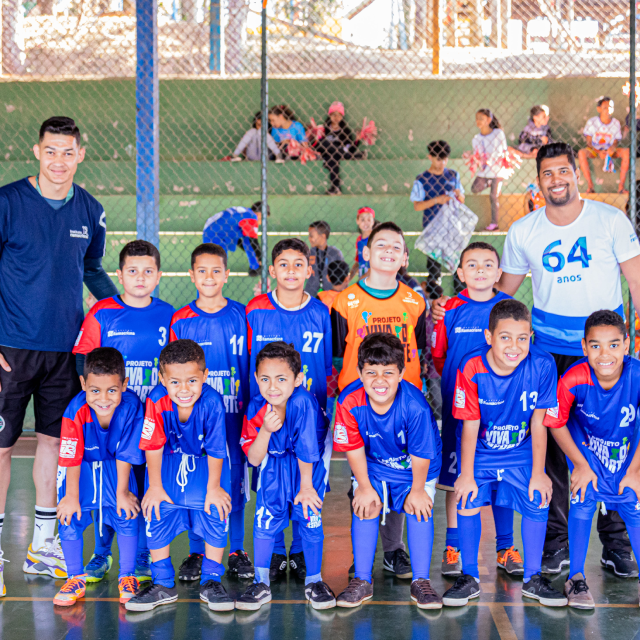
Offers complementary education to children and teenagers, promoting sociability and creative skills, stimulating cognitive potential and providing a positive attitude towards knowledge, while helping each individual to recognize themselves as an active and participating subject.

Promotes, through the Teenager Apprentice Program, the training of young people, enabling them to enter the labor market. It also creates professional qualification opportunities for its audience and helps to requalify the adults, expanding their skills and employability.

Ramacrisna’s purpose is to ensure the inclusion of socially vulnerable children and young people in its projects and promote their personal, social and economic development.

Develops several partnerships with public authorities, private companies, international organizations to mobilize and share knowledge, expertise, technology and financial resources to develop actions and projects that meet the SDGs

The installation of a Photovoltaic Plant will generate continued savings for about 25 years, promote the financial sustainability of Ramacrisna, produce clean energy from a silent and long-life source as well as immediate savings for social activities.

For 60 years, Ramacrisna has been developing a responsible and transparent work, always valuing ethics and an inclusive and participatory management.

Ramacrisna’s Wire Mesh Factory uses modern machinery and adopts sustainable production principles.

Provides safe, nutritious and sufficient food for all students throughout the year. In addition, through an emergency action during the covid-19 pandemic, it distributed basic food baskets and food voucher cards to the vulnerable public served by the institution.

Ramacrisna guarantees the full and effective participation and equal opportunities for women in all its projects. It also promotes lectures and workshops on gender equality and the empowerment of all women and girls.
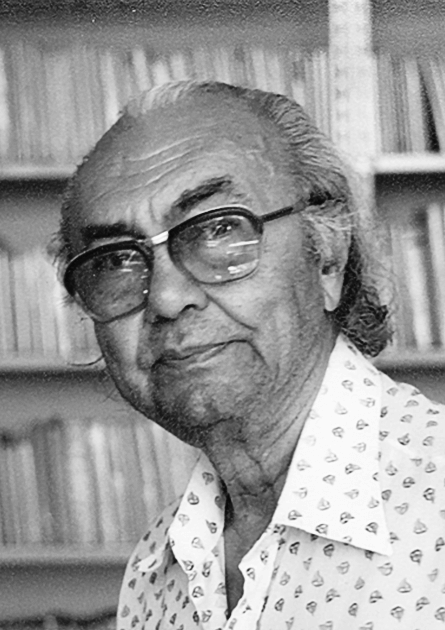
The journalist Arlindo Corrêa da Silva always dreamed of contributing to society and helping others. He arrived in Minas Gerais in the 1940s and, by the mid-1950s, concluded that education was the most effective way to prevent social problems. He then began working with eight children, whom he welcomed into his home in Belo Horizonte, taking them off the streets.
In 1959, he officially registered the Social Organization under the name of the Indian philosopher Sri Ramakrishna, an ecumenist who lived in the 19th century and advocated social work as a means of transforming human beings.
As the number of children grew, space became limited. With the help of friends, he began purchasing plots of land in Betim. In 1960, Silva started the construction of the Institute. In 1963, he inaugurated the first building and, the following year, the second, which operated as a boarding school until 1992.
The founder passed away in 1993, but left a deliberative council to manage Ramacrisna.
Since 1992, the Institute has been developing partnerships with the municipal governments of Betim and Esmeraldas, with the aim of improving its low-cost food initiatives while also raising the level of education, vocational training, and social assistance.