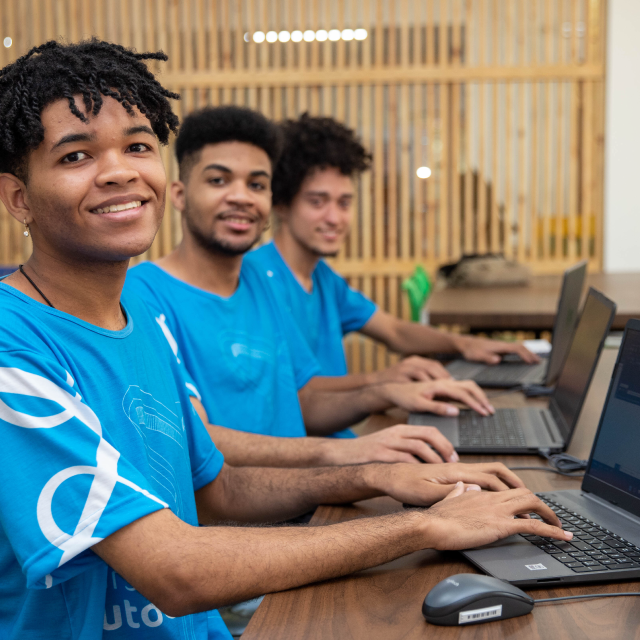
FabLab Ramacrisna is a 500m² digital manufacturing laboratory equipped with state-of-the-art technology, created to promote innovation, creativity, and productive inclusion. The space offers free training in 3D printing, educational robotics, AutoCAD, website and app development, and web and mobile programming.
With a focus on practical application, participants learn how to use 3D printers, CNC routers, CNC lasers, printing plotters, and design and modeling software, developing projects that can be transformed into services or new businesses. The goal is to democratize access to manufacturing tools, stimulate local entrepreneurship, and prepare young people and adults for the demands of the new economy.
Certified by the global FabLabs network, a program of the Massachusetts Institute of Technology (MIT), FabLab Ramacrisna is one of 186 laboratories in Brazil and one of 10 in Minas Gerais, establishing itself as a benchmark for innovation and social inclusion. The space is open to the community every Wednesday, by appointment, allowing anyone to develop their own projects using the laboratory’s infrastructure.
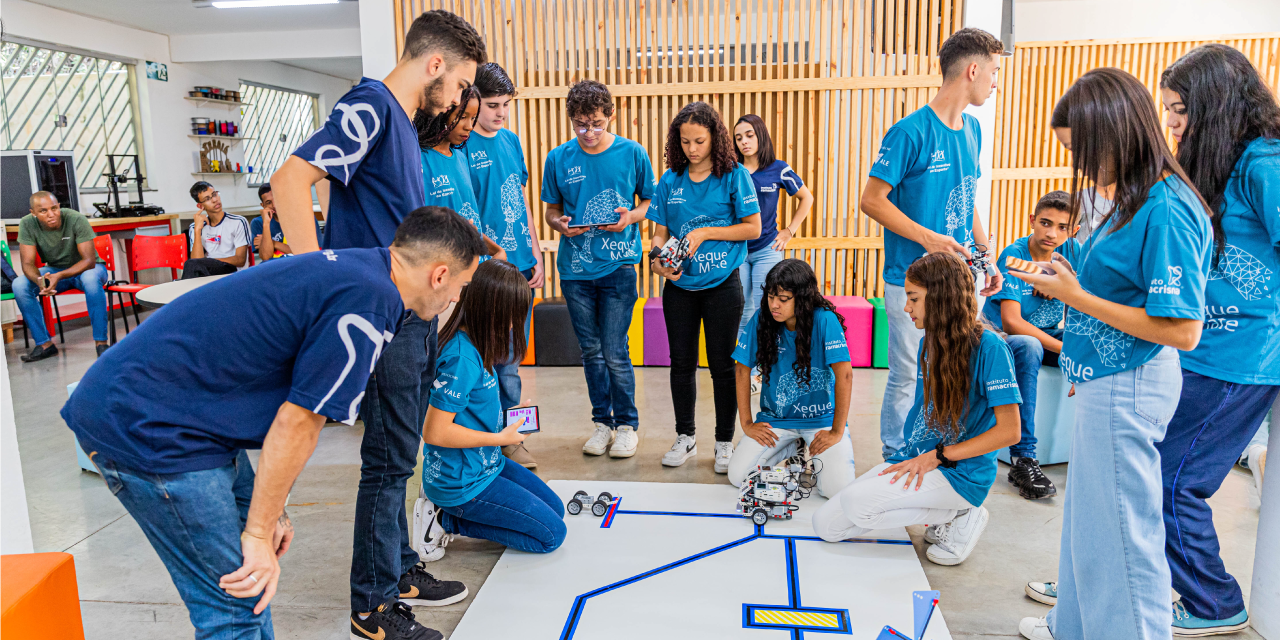
The perfect combination of technology and programming places robotics at the center when it comes to preparing children and adolescents for life.
Inventing, programming, assembling, and making a small robot move are activities that enhance logical reasoning, encourage collaborative work, and promote interdisciplinary skills, among other educational gains.
But it goes far beyond that. As students have fun with programmable kits, software, protoboards, wires, sensors, boards, and motors, they begin to shape their future without even realizing it. By developing an interest in programming, they prepare the ground for their future entry into the job market, which shows an ever-growing demand for these skills.
The use of programs such as PowerPoint, Word, Excel, Paintbrush, Publisher, and others helps expand the inventive and recreational capacities of children and adolescents. Educational and research software is used to enrich content and teaching processes. Video games have been adopted as a learning tool, as games present a series of challenges that constantly require players to evaluate, organize, and prioritize information and, based on it, make strategic decisions in both the short and long term.
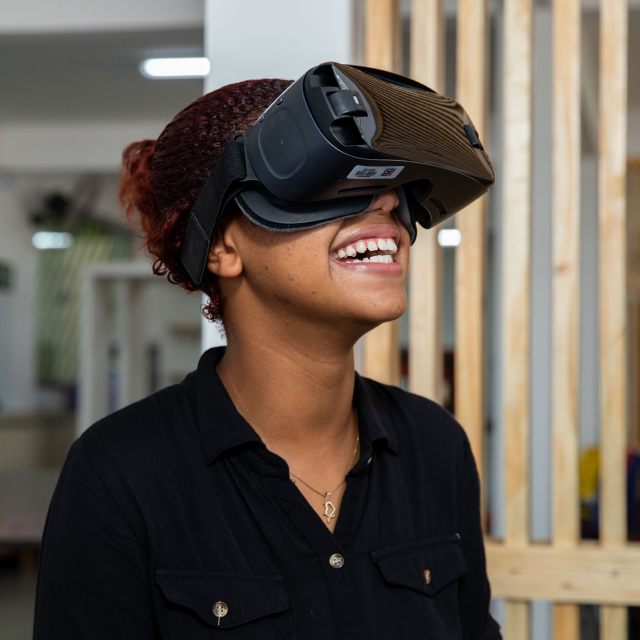
The purpose of virtual reality is to simulate a reality that does not exist. This technology allows students to interact with three-dimensional objects and environments. For example, teachers can use tablets to guide students to remote or otherwise inaccessible areas of the real world, such as swimming with sharks or visiting outer space, or transform the classroom into a museum without leaving its physical location.
In this type of experience, students become active participants and are therefore able to enhance their learning process in a way that feels more immersive and closer to reality.
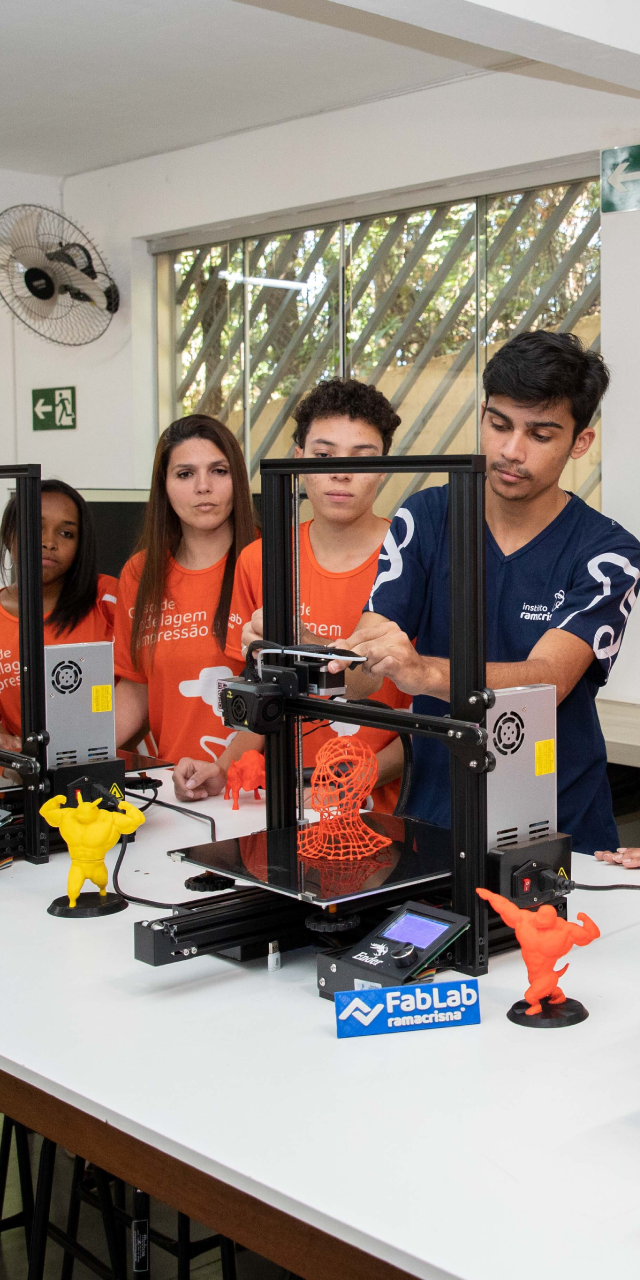
The 3D printer promotes activities that encourage collaboration, creativity, and sharing. To use this technology, students create their models in the Paint 3D application (Windows operating system) and then use the Simplify3D software to translate their 3D models into instructions that the 3D printer can understand.