April 2 is World Autism Awareness Day, an important day for reflection and learning. According to data from the World Health Organization (WHO), there are approximately 70 million people with Autism Spectrum Disorder (ASD) worldwide, with 2 million in Brazil alone. More than just a date on the calendar, it is a time for reflection, empathy, and, above all, the creation of initiatives that promote inclusion on an ongoing basis.
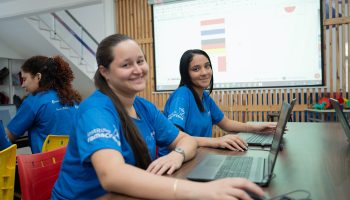
In Betim, in the Belo Horizonte Metropolitan Region, an initiative developed at Polo 20 of the CASA Project, carried out by the Ramacrisna Institute in partnership with the Betim City Government, stands out for combining creativity, warmth, and social impact. The initiative, which emerged during the project’s biscuit workshop classes, gained traction and won over the entire community: handmade sensory stones to stimulate touch and aid in emotional regulation for people with ASD.
The objects have proven effective not only for people with autism but also for those living with anxiety, ADHD, and other conditions. Produced by the students during the workshops, they carry, in addition to their therapeutic function, a strong emotional value.
Psychologist Jéssica Tauane explains that these sensory aids greatly help with focus and emotional regulation. “People with ASD tend to be more sensitive to sensory stimuli, especially textures, so aids like these stones help precisely in this process, because touch and texture act as a focal point that helps the body and mind calm down. Although they are widely used by people with autism, they can also benefit anyone who needs support to calm down or find relief, especially in cases of anxiety,” she concludes.
The experiment has already yielded positive results. Rayane Clisma, 28, is the mother of 7-year-old Alan Gabriel. She describes how the pebble has had a positive effect on her son. “The pebble really calms my son; you can see the difference when he uses it. In fact, the school itself found the tool interesting and approved the initiative. Recently, one incident really stood out and highlighted this benefit. Alan forgot the stone at home when he went to class, and it was a day when he was more agitated; he got very nervous and wanted the stone to calm down. That’s when the school’s educational coordination team suggested he keep one in his backpack specifically for class. As a mother, it’s been an excellent experience,” she says.
In charge of the workshop, biscuit art teacher Helen Freitas—who is also the mother of a child with autism—explains that the idea was quickly embraced by the participants. “In environments with a lot of information, which can cause stress, an outlet like these little stones helps a lot. When I brought up the idea, people embraced it, and the results have been very positive. Some children at the center used them and really liked them. My son also really liked them; the texture helps in those moments when they need to move around,” she notes.
For Aline Fauez, project coordinator at the Ramacrisna Institute, initiatives like this reinforce the social role of projects developed in communities. “When we manage to transform a workshop into a space for listening and creating real solutions for communities, we amplify the impact of the projects. Actions like this show that inclusion can emerge in simple ways, yet with profound significance. It is essential to encourage and develop initiatives that promote acceptance, information, and respect for differences. And decentralizing this work is an important step toward reaching more and more people. Hub 20 of the CASA project is located in the Imbiruçu district, one of the largest and most populous in the city, and is a real-life example of how it is possible, with a simple gesture, to make a difference,” she states.