Although they recognize dialogue as the best approach, a survey shows that Brazilians still normalize slapping and other forms of violence in early childhood education
Raising a child involves teaching boundaries, instilling values, and helping them understand the consequences of their actions. But in Brazil, violent practices are still mistaken for forms of discipline. A recent survey shows that 50% of Brazilians consider it acceptable to slap children as a form of punishment, revealing how physical violence is still normalized within many families.
The survey “Attitudes and Perceptions on Childhood and Violence Against Children and Adolescents,” conducted by Quaest in partnership with Infinis (Institute for a Healthy Childhood), polled 2,202 Brazilians aged 18 and older. The data show that, although conversation is recognized as one of the best ways to educate, there is a gap between what society considers ideal and what it still practices or tolerates.
The question of how to educate without hitting begins, first and foremost, with the understanding that children and adolescents are still developing. They need guidance to understand rules, boundaries, and responsibilities, but that does not mean violence is necessary.
Yelling, hitting, pulling ears, or humiliating a child do not teach them to better handle conflicts. On the contrary, they can convey the idea that force is a legitimate way to solve problems. Education based on dialogue allows us to explain the reason behind a rule, listen to the child, and establish consistent consequences for inappropriate behavior.
This does not mean an absence of limits. A healthy family environment also depends on clear rules, routine, mutual respect, and adults capable of maintaining firmness without resorting to aggression.
Protection against violence is not merely a matter of family choice. The Statute of the Child and Adolescent (ECA) establishes that children and adolescents are rights-holders and must receive comprehensive protection.
The legislation also stipulates that it is the duty of the family, society, and the State to guarantee these rights. Therefore, the idea that “everyone raises their child as they see fit” should not be used to justify aggression.
The survey underscores this challenge: 62% of respondents stated that they would prefer not to intervene when witnessing a child being hit or having their ears pulled in public. Among them, 32% said they would do nothing because “everyone minds their own business,” while 30% would like to intervene but would feel embarrassed.
Learning how to raise children without hitting is, therefore, a task that involves society as a whole. Parents, guardians, educators, and other adults who interact with children and adolescents can help replace violent practices with strategies based on listening, acceptance, and guidance.
Play, conversations, agreements, and shared activities are also important tools for strengthening bonds. An environment based on respect and safety can foster learning, the expression of feelings, and the development of autonomy.
Parenting does not mean controlling through fear. It means preparing children and adolescents to get along with others, make choices, and understand boundaries. Breaking away from the idea that hitting is a form of discipline is an important step toward building a safer, more respectful, and healthier childhood.
Promoting an education based on dialogue, respect, and healthy coexistence also means helping children and adolescents develop autonomy, strengthen bonds, and find ways to cope with challenges and conflicts without resorting to violence.
This transformation does not happen in isolation. It depends on a support network made up of families, schools, social organizations, government agencies, and the entire community, all of whom share the responsibility of guaranteeing rights and creating opportunities for the development of children and adolescents.
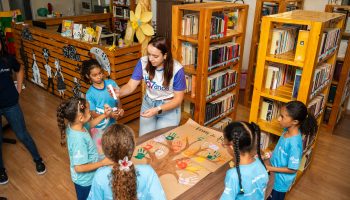
It is within this commitment to education and human development that the work of the Ramacrisna Institute finds its place. Through projects focused on education, training, culture, sports, and social interaction, the institution helps strengthen bonds and expand opportunities for children, adolescents, and young people.
More than just offering activities, these spaces help build environments for learning, social interaction, and development, where children and adolescents can be heard, respected, and encouraged to realize their full potential.
After all, education also means creating conditions so that children and adolescents can grow up with their rights respected, have opportunities, and build a path toward development and autonomy. Would you like to contribute to this transformation? Learn about the work of the Ramacrisna Institute and discover how to support our initiatives in education, development, and the protection of children and adolescents. Find out how you can help.