Courses|Education / Professionalization|Technology and inovation
New National Education Plan focuses on equity, digital education, technical education, and expansion of comprehensive education to transform the future of Brazilian education by 2036
Brazil begins a new stage in public education with the enactment of Law No. 15,388/2026, which establishes the new National Education Plan (PNE) for the period 2026 to 2036. The legislation establishes guidelines, objectives, and strategies that will guide the country’s educational policies during the next decade. But what exactly changes in the new PNE?
The plan comes with broader goals, a focus on the quality of learning, combating inequalities, and strengthening professional and technological education. In total, the new PNE brings together 19 objectives, 73 goals, and 372 strategies, in addition to monitoring and governance mechanisms that promise to make execution more efficient.
The new plan is also aligned with the National Education System (SNE), strengthening collaboration between the Union, states, and municipalities to ensure greater integration in educational policies.
One of the main differences in the new plan is the centrality of equity. For the first time, the PNE establishes specific goals to reduce educational inequalities related to race, income, territory, and social conditions.
In addition, the document broadens the vision of quality education. It is not just about increasing enrollment, but about ensuring effective learning, adequate infrastructure, access to technology, and student retention in school.
Another important advance is the creation of biennial action plans and monitoring of goals every two years, allowing adjustments throughout the plan’s implementation.
The new PNE also expands investment in education. The goal is for Brazil to reach public investment equivalent to 7.5% of GDP by the seventh year of the plan’s implementation and 10% by 2036.
The new PNE covers everything from early childhood education to postgraduate studies. Among the priority goals are:
In addition, what changes in the new National Education Plan (PNE) is the appreciation of professional and technological education as a strategy for economic development and social inclusion. In other words, the Plan recognizes that professional training is essential to generate opportunities, reduce inequalities and prepare young people for the world of work.
Thus, social and educational initiatives such as those developed by the Ramacrisna Institute gain even more relevance.
The Ramacrisna Institute already works directly on several fronts that align with the objectives of the new National Education Plan.
Professional qualification, digital inclusion, and educational support projects developed by the institution represent, in practice, actions aligned with the goals established by the National Education Plan for the next decade.
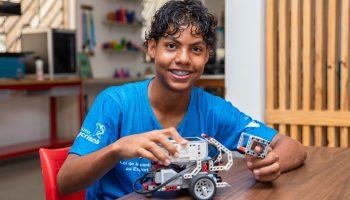
For example, Ramacrisna’s FabLab directly contributes to the digital education goals outlined in the new plan. The space promotes access to technology, innovation, and hands-on learning, encouraging skills that are essential for the future of work.
The initiative strengthens competencies related to creativity, critical thinking, and the conscious use of digital technologies.
In addition, the free courses offered by the Institute already support the advancement of professional and technological education advocated by the new National Education Plan (PNE). This is because the initiative goes beyond simply preparing young people and adults for the job market — it also expands opportunities for communities facing social vulnerability.
Furthermore, the Ramacrisna Educational Support Center (CAER) also plays an important role by supporting children, adolescents, and families in educational and social development processes. The work carried out strengthens access to education, academic support, and the promotion of citizenship.
The new National Education Plan represents an important opportunity to transform Brazilian education over the next ten years. Its focus on quality, inclusion, digital education, technical training, and reducing inequalities demonstrates a broader vision of the country’s challenges.
In this process, social organizations such as the Ramacrisna Institute play a fundamental role. By promoting professional qualification, social inclusion, access to technology, and educational development, the institution is already directly contributing to building the kind of education envisioned in the new PNE.
Would you like to learn more about projects that are already helping transform education and expand opportunities for children, young people, and adults? Follow the initiatives of the Ramacrisna Institute and discover how education can change realities and build a future with greater inclusion, autonomy, and social development.