Recognition granted by the Kingdom of Bhutan reinforces commitment to human development
The discussion on happiness and well-being has moved beyond being merely a subjective topic to take center stage in debates on development, productivity, and quality of life. A reflection of this is Brazil’s rise in the World Happiness Report, published by the United Nations (UN). In 2025, the country climbed eight spots in the ranking and now occupies 36th place.
The topic gains even greater relevance at a time when the update to Regulatory Standard No. 1 (NR-1) is increasing organizations’ focus on psychosocial risks in the workplace, reinforcing the importance of practices aimed at well-being, mental health, and the quality of relationships.
Among the outcomes of this shift in perspective is an unprecedented achievement for the nonprofit sector. The Ramacrisna Institute, a social organization based in Minas Gerais with 67 years of experience in the areas of education, vocational training, sports, culture, and human development, officially received the FIB/GNH International Certification—Gross National Happiness—awarded by the Kingdom of Bhutan. With this achievement, Ramacrisna becomes the first social organization in the Americas to receive this recognition.
The award was presented during the event “When Well-Being Becomes a Strategy,” held this week in Belo Horizonte. The recognition was presented by Pedro Lins, an official facilitator of the FIB/GNH methodology and an institutional partner of the Center for Bhutan Studies and GNH, the body responsible for disseminating the methodology created in the Kingdom of Bhutan.
The FIB/GNH methodology evaluates aspects such as psychological well-being, interpersonal relationships, governance, purpose, and quality of life. In this first assessment, Ramacrisna received three stars on a scale ranging from one to five.
According to Solange Bottaro, vice president of the Ramacrisna Institute, the certification recognizes a culture built over decades. “Ramacrisna did not have to change its essence to receive this certification. What the methodology did was recognize and validate practices that have been part of our culture for many years. Since the institution’s founding, we have believed that human development and results go hand in hand,” she states.
A Conversation About the Future of Organizations
The event “When Well-being Becomes Strategy” brought together business leaders, human resources professionals, experts, representatives from social organizations, and students to discuss topics such as mental health, organizational culture, human development, and institutional sustainability.
The program featured the lecture “Happiness, Inc. – Happy People, Better Companies,” delivered by Everton Lima, a specialist in corporate happiness and human development; the panel “Purpose, Well-Being, and Business Results: The Triad of Impact in Today’s Organizations,” which brought together experts in the fields of communication, human resources, ESG, and organizational development; and a presentation on the FIB/GNH methodology led by Pedro Lins.
The event reinforced a line of thinking that has been gaining traction in organizations across different sectors: how to achieve sustainable results without losing sight of people.
Caring for people as an institutional commitment
In 2025, Happiness officially became part of Ramacrisna’s institutional values, reinforcing a guiding principle that had already been part of the organization’s history: placing people at the center of its operations.
The pursuit of FIB/GNH certification arose from this movement, as a way to methodically and thoroughly evaluate practices related to well-being, governance, relationships, and human development.
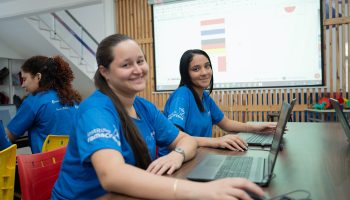
The certification aligns with practices already adopted by Ramacrisna, particularly in the area of mental health. In 2025 alone, the institution provided 704 psychological counseling sessions for employees and 807 for students and apprentices, reinforcing its commitment to promoting mental health and the holistic development of individuals.
According to Human Resources Coordinator Aline Michelli, structured care initiatives contribute to healthier and safer environments. “When mental health care is addressed openly and responsibly, people feel more comfortable seeking support. This strengthens relationships, contributes to prevention, and generates positive impacts for the entire organization,” she says.