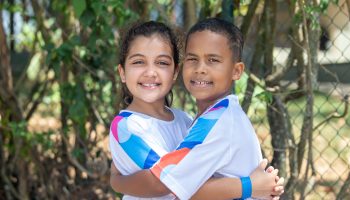
New law recognizes access to nature as a right of children and adolescents and reinforces the importance of environmental education from childhood onward
Contact with nature has gained even greater importance in policies for the protection of children and adolescents in Brazil. Law No. 15,512, dated September 22, 2026, establishes guidelines to guarantee, as an absolute priority, the right of children and adolescents to nature. Known as the Environmental ECA, the legislation amends the Statute of the Child and Adolescent (ECA), the National Environmental Policy, and the National Policy on Climate Change.
In short, the new legislation recognizes that this right involves access to healthy natural environments. This includes playing in nature, interacting with and forming bonds with the environment, and receiving nature-based education. In practice, this means that public squares, parks, and other natural spaces are integral to the development and protection of children and adolescents.
Furthermore, it reinforces the idea that learning about the environment need not be limited to the classroom. Observing a tree or understanding where compost comes from, for example, are experiences that can bring children closer to environmental issues.
A child’s right to nature is now expressly included among the rights that must be guaranteed with the highest priority by public authorities, families, communities, and society.
The legislation also mandates that the federal government, states, the Federal District, and municipalities work collaboratively and across sectors to put these guidelines into practice.
Among the measures outlined are incentives for the creation of natural spaces and urban green areas. It also provides for children and adolescents to visit protected areas and promotes free play in contact with nature.
Furthermore, urban planning is part of this discussion. The law establishes guidelines regarding safe routes for walking or cycling, as well as naturalized plazas and courtyards. Another important point is the creation of accessible warning systems and evacuation routes for situations involving extreme weather events. In schools, the guidelines include measures such as promoting native vegetation, creating shaded areas, establishing vegetable gardens, implementing water management, and ensuring accessibility.
Having experiences close to the natural environment can help children and adolescents understand that nature is not something distant from their daily lives. When learning occurs through observation and participation, concepts such as conservation, reuse, mindful consumption, and care for natural resources can take on concrete meaning.
The connection to nature is linked to the physical, emotional, mental, and social well-being of children and adolescents. The standard also recognizes the right to free play in natural environments.
For this reason, outdoor activities and upcycling workshops, for example, can complement learning and stimulate curiosity. It’s not just about teaching about natural resources, but also about allowing children and adolescents to realize the effects of their own choices.
According to the legislation, environmental education must be integrated, continuous, and ongoing at all levels and in all types of education. In addition, topics related to climate change, biodiversity, and socio-environmental risks and emergencies must be incorporated into educational programs.
Despite these guidelines, there remains a challenge in making environmental education a part of everyday life. According to the 2024 School Census, one-third of Brazilian schools do not conduct activities related to the environment or climate change.
For this reason, social organizations can also contribute by expanding learning opportunities.
The Ramacrisna Institute develops environmental education initiatives integrated into activities carried out with children and adolescents. At the Institute, the topic is not restricted to the classroom: students participate in field trips, interactive workshops, and hands-on activities that allow them to closely observe various processes related to environmental preservation.
Ramacrisna carries out various environmental education initiatives with children and adolescents from NAVE—the Center for Essential Learning and Experiences. These activities aim to engage students with environmental issues through hands-on experiences, workshops, field trips, and awareness-raising activities.
One example is the composting project, which has been running since 2014. The initiative repurposes organic kitchen waste, dry leaves, and grass clippings, which undergo a controlled process until they are transformed into organic fertilizer. Students have the opportunity to observe this process and understand, in practice, how materials that would otherwise be discarded can take on a new purpose.
Interaction with the natural environment is also part of this learning experience. Ramacrisna’s nature trail is located in an area of approximately 4 hectares of preserved Cerrado forest and allows children and teenagers to observe trees, plants, and wildlife. More than just a recreational space, the trail serves as an extension of the classroom, creating opportunities to learn about and appreciate the biodiversity found right on the school grounds.
Throughout the year, dates such as World Environment Day, World Water Day, and Arbor Day also provide opportunities to broaden discussions on conservation and sustainability. On these occasions, students participate in recreational activities, workshops, reflections, and hands-on activities related to these themes. Among the experiences already carried out are the collective creation of a “Tree of Happiness,” featuring messages about the planet’s future, and an educational campaign on wildfires and global warming, which led students to share awareness-raising information with the community.
These experiences show that promoting environmental education means more than just teaching concepts about conservation. At NAVE, the topic is approached in a participatory manner, allowing children and adolescents to observe, experiment, create, share knowledge, and understand how their own choices can contribute to caring for the environment.
The creation of specific legislation regarding children’s right to nature reinforces that preserving green spaces and expanding access to natural areas is not merely an environmental issue. It is also a way to ensure opportunities for social interaction, learning, play, and development.
When a child monitors a composting project, hikes a trail, or learns to care for a plant, they are not just learning about the environment. They are building a relationship with the place where they live and understanding that their choices can also contribute to preserving the planet.
At Ramacrisna, these experiences are part of an educational approach that seeks to connect knowledge and practice. Learn about the Institute’s social and educational initiatives and join this chain of goodwill for a future in which children and adolescents can learn, play, and grow in contact with nature.