Art and culture|Children|Pedagogical support|Young apprentice
Ensuring that children are in school and have access to learning experiences is one of the most effective ways to protect childhood
The consequences of child labor go far beyond physical exhaustion or the loss of time for play. When a child or adolescent must take on responsibilities incompatible with their age, fundamental rights are compromised, affecting their physical, emotional, social, and educational development. Therefore, ensuring that children are in school and have access to learning opportunities is a responsibility of society as a whole.
In Brazil, the protection of children and adolescents is ensured by the Statute of the Child and Adolescent (ECA), which establishes fundamental rights related to education, family life, leisure, culture, and vocational training within the law. In other words, the legislation recognizes that childhood is a phase that should be dedicated to learning, development, and building life plans.
Although advances in recent decades have reduced child labor rates, the problem still affects thousands of Brazilian children and adolescents. Often, the activity is seen as a way to help the family or occupy free time, but reality shows that the impacts can follow a person throughout their life.
The consequences of child labor can be observed in different areas of life. One of the most evident is the harm to education. Working children often experience greater learning difficulties, frequent absences from school, poor academic performance, and, in many cases, dropping out of school.
When education ceases to be a priority, future opportunities are also reduced. Education is one of the main pathways to achieving better living conditions, accessing the skilled labor market, and developing autonomy.
In addition to educational setbacks, child labor can cause physical harm. Depending on the type of work performed, children and adolescents are exposed to risks of accidents, health problems, overexertion, and situations unsuitable for their age group.
The emotional impacts also deserve attention. The burden of responsibilities can lead to anxiety, stress, low self-esteem, and difficulties in socializing. After all, childhood is a crucial period for playing, learning, interacting with others, and building important foundations for adulthood.
The Statute of the Child and Adolescent recognizes children and adolescents as rights-holders and mandates that they receive full protection. The legislation establishes that working before the age permitted by law constitutes a violation of these rights.
In Brazil, vocational training is the primary legal and protected pathway for adolescents to enter the workforce. This model allows young people to develop professional skills while continuing their studies, always with supervision, guaranteed rights, and activities appropriate to their stage of development.
This distinction is fundamental. While child labor deprives children of opportunities for growth and learning, vocational training promotes education, social inclusion, and preparation for the future.
Combating child labor does not depend solely on enforcement. It is also necessary to create opportunities for children and adolescents to develop their talents, strengthen bonds, and build prospects for the future.
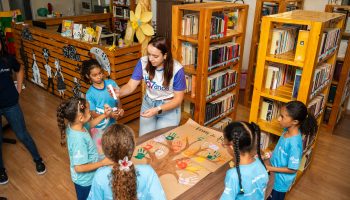
It is in this context that social initiatives play an important role. At Ramacrisna, various projects contribute to the protection of children and adolescents by offering safe spaces for learning, social interaction, and development.
NAVE (Center for Essential Learning and Experiences)—formerly CAER, for example—serves children and adolescents in the public school system with free activities that combine education, sports, culture, technology, and citizenship. The project expands learning experiences and strengthens fundamental skills for the participants’ well-rounded development.
The Ramacrisna Philharmonic Orchestra, meanwhile, uses music as a tool for social transformation. Through music education, children and adolescents develop discipline, creativity, teamwork, self-esteem, and new perspectives for the future.
Another highlight is the Apprenticeship Program, which promotes the protected integration of adolescents and young people into the labor market, in compliance with the law and by balancing vocational training with formal education.
When a child studies, participates in cultural activities, plays sports, and has access to development opportunities, they expand their possibilities for building a future with greater autonomy and quality of life.
Therefore, combating child labor means much more than simply preventing children from working. It means ensuring that they can fully exercise their rights, develop their potential, and experience each stage of life at the appropriate time.
The consequences of child labor affect not only individuals and families but society as a whole. Conversely, investing in education, culture, social interaction, and inclusion generates benefits that are felt for generations.
Childhood should be a time of discovery, learning, and dreams. And protecting this period is a responsibility shared by families, schools, social organizations, businesses, and the government. After all, children need to study, play, learn, and grow. Work can wait.
Help protect the childhood of more children. Make a donation.